
Get Appointment
- contact@wellinor.com
- +(123)-456-7890
Blog & Insights
- Home
- Blog & Insights
- Order new infrastructure resources ahead of time so you don't run into capacity shortages that could disrupt operations.
- Track compute resource performance to identify underutilized or overwhelmed systems and suggest optimizations for better cost management.
- Fully leverage historical trends and usage patterns to achieve smarter long-term planning and budgeting.
https://youtu.be/5Uob3eBvm4A
Keyva CTO Anuj Tuli discusses how an acquisition of a leading data integration platform help enhance our offerings in the DevOps and cloud automation space.
[post_title] => CTO Talks: IP and Integrations [post_excerpt] => [post_status] => publish [comment_status] => closed [ping_status] => closed [post_password] => [post_name] => cto-talks-ip-and-integrations [to_ping] => [pinged] => [post_modified] => 2025-12-15 22:02:06 [post_modified_gmt] => 2025-12-15 22:02:06 [post_content_filtered] => [post_parent] => 0 [guid] => https://keyvatech.com/?p=5187 [menu_order] => 0 [post_type] => post [post_mime_type] => [comment_count] => 0 [filter] => raw ) [3] => WP_Post Object ( [ID] => 5194 [post_author] => 13 [post_date] => 2025-08-27 21:59:57 [post_date_gmt] => 2025-08-27 21:59:57 [post_content] =>https://youtu.be/mYhHCqmOEb4
Keyva CTO Anuj Tuli dives into the importance of observability in optimizing business operations.
[post_title] => CTO Talks: Observability [post_excerpt] => [post_status] => publish [comment_status] => closed [ping_status] => closed [post_password] => [post_name] => cto-talks-observability [to_ping] => [pinged] => [post_modified] => 2025-12-15 22:01:50 [post_modified_gmt] => 2025-12-15 22:01:50 [post_content_filtered] => [post_parent] => 0 [guid] => https://keyvatech.com/?p=5194 [menu_order] => 0 [post_type] => post [post_mime_type] => [comment_count] => 0 [filter] => raw ) [4] => WP_Post Object ( [ID] => 5144 [post_author] => 7 [post_date] => 2025-08-27 16:25:59 [post_date_gmt] => 2025-08-27 16:25:59 [post_content] =>In today’s hybrid cloud landscape, organizations are eager to embrace cloud-native technologies like Kubernetes and with the right approach, they can do so with confidence. By addressing internal skill gaps, clarifying roadmaps, and aligning modernization strategies with business goals, teams can set the stage for meaningful progress.
[post_title] => Kubernetes Adoption Accelerator [post_excerpt] => [post_status] => publish [comment_status] => closed [ping_status] => closed [post_password] => [post_name] => kubernetes-adoption-accelerator [to_ping] => [pinged] => [post_modified] => 2025-08-27 16:29:35 [post_modified_gmt] => 2025-08-27 16:29:35 [post_content_filtered] => [post_parent] => 0 [guid] => https://keyvatech.com/?p=5144 [menu_order] => 0 [post_type] => post [post_mime_type] => [comment_count] => 0 [filter] => raw ) [5] => WP_Post Object ( [ID] => 5136 [post_author] => 7 [post_date] => 2025-08-20 15:01:20 [post_date_gmt] => 2025-08-20 15:01:20 [post_content] => It was just over twenty years ago that enterprises talked about server sprawl and the sustainability of maintaining so many hardware servers on prem. That conversation was initiated by the dawn of virtualization thanks to innovative vendors like VMware whose ESX infrastructure began transforming the datacenter landscape. Suddenly, organizations could consolidate workloads, which significantly reduced the need to purchase and maintain endless racks of hardware. Suddenly, a new standard was born.Virtualization: Streamlined, But Still Complex
While the days of racks filled with metal boxes are largely behind us, virtual machines still rely on a complex ecosystem of underlying hardware, software, and systems that require perpetual licensing. From hypervisors and storage systems to network configurations and management tools, each component plays its own key role in keeping your applications and processes running, so that your business can operate and thrive. While the initial investment can be substantial, it is only the beginning as ongoing costs continue throughout the system's lifecycle. All that “stuff” needs to be supported, maintained and upgraded after every lifecycle. This is why we calculate the Total Cost of Ownership to reveal the complete financial impact of virtualization beyond upfront expenses. Without accounting for long-term investments in infrastructure, operations, and personnel, organizations cannot accurately assess a solution's true value.Factoring TCO is Highly Complicated
As organizations embrace hybrid architectures, arriving at the Total Cost of Ownership (TCO) of your IT infrastructure investments is no longer just about accounting for hardware investments, support contracts, and upgrade cycles. Today’s hybrid environments introduce a host of new variables that make TCO a murky process.- Scalability Costs: Successful and competitive businesses want to grow, which means your IT infrastructure must scale with it. Whether expanding cloud capacity or upgrading on-prem resources, scalability comes with a price tag that must be accounted for.
- Technical Debt: Every organization is guilty of quick fixes, legacy code, and rushed development decisions at some point. Eventually, those shortcomings accumulate into technical debt that can slow innovation and inflate future upgrade expenses.
- Resource Utilization Imbalances: Hybrid environments often suffer from overutilized on-prem assets. Underutilization means your investments aren’t being optimized. This is typical with cloud environments where underutilization can result in surprise bills that wreak havoc on budgets.
- Tool Sprawl: Managing a hybrid estate often leads to the adoption of multiple tools for monitoring, security, and orchestration which can result in overlapping functionality, duplicate licensing, and increased training and support costs.
The Challenge of Sustainability
While you may not have witnessed the dawn of server virtualization, you were most likely present during the COVID years. If so, you remember the sudden disruption in supply chains. The fragility of supply chains is important to keep in mind when aiming to extend the life of existing infrastructure because the longer you rely on aging infrastructure, the more dependent you become on the availability of compatible hardware. Sustainability in IT isn’t just about financial viability. It’s also about resilience and availability. Sustainability can also be threatened when the financial equation changes due to mergers or acquisitions, as demonstrated by Broadcom's recent acquisition of VMware.Containers Mean Lower TCO
Even more compelling, containers typically run on open-source platforms such as Kubernetes, eliminating hefty licensing fees associated with proprietary solutions. The lightweight approach of containers uses far less memory and storage, which means you can run more workloads on fewer servers. That translates to lower costs on many fronts including power, cooling and space. Kubernetes also natively automates tasks such as scaling, load balancing and failover, minimizing the need for manual intervention and operational overhead. As application demand grows, Kubernetes automatically deploys additional containers as needed, ensuring seamless scaling without a spike in labor costs. Containers also pair naturally with OPEX-friendly, consumption-based cloud models where you pay only for the resources you use, and scaling capacity up or down is simple and fast. By migrating away from costly virtualization licenses and legacy technical debt, organizations can redirect resources toward innovation and accelerate product releases.Container Considerations
If the concept of containers is new to your organization, there are some things you need to consider before transitioning.- Your organization may have a skills gap, so factor in retraining costs or bringing new talent to lead the team.
- While cloud hosting offers flexibility, extracting and analyzing cloud-hosted data can incur unexpected fees. Be sure to factor in data egress costs when planning workload analytics.
- You may want to refactor your workloads by separating them into microservices to take advantage of containers.
- Containers may eliminate licensing costs, but they don’t eliminate the need for robust cybersecurity. Container environments require dedicated security strategies, including image scanning, runtime protection, and access controls.
- Successful adoption depends on support from across the organization, so communicate the benefits clearly.
Make Keyva Part of the Equation
Transitioning from a virtualized environment to a container platform is not a mere lift-and-shift. It is a paradigm shift, from how you monitor systems and patch applications, to how you develop, deploy, and manage workloads. Operational workflows, troubleshooting, and even the skills required for day-to-day tasks are fundamentally different. It isn’t a migration; it is a platform modernization effort. At Keyva, we’ve guided organizations through this shift for years. We help you identify the best workloads to containerize, select the optimal platforms, and ensure your transition delivers long-term value. Our hands-on approach includes training your team to maximize efficiency, control costs, and budget with confidence for your new environment. Let Keyva be your partner for a smooth, successful container transformation. [table id=3 /] [post_title] => Total Cost of Ownership: Virtualization and Container Environments [post_excerpt] => [post_status] => publish [comment_status] => closed [ping_status] => closed [post_password] => [post_name] => total-cost-of-ownership-virtualization-and-container-environments [to_ping] => [pinged] => [post_modified] => 2025-08-20 15:01:20 [post_modified_gmt] => 2025-08-20 15:01:20 [post_content_filtered] => [post_parent] => 0 [guid] => https://keyvatech.com/?p=5136 [menu_order] => 0 [post_type] => post [post_mime_type] => [comment_count] => 0 [filter] => raw ) [6] => WP_Post Object ( [ID] => 5197 [post_author] => 13 [post_date] => 2025-08-12 22:13:14 [post_date_gmt] => 2025-08-12 22:13:14 [post_content] =>https://youtu.be/jG693ZS3Ezg
Keyva CTO Anuj Tuli discusses how organization are leveraging DevOps to enhance their operational efficiency.
[post_title] => CTO Talk: DevOps [post_excerpt] => [post_status] => publish [comment_status] => closed [ping_status] => closed [post_password] => [post_name] => cto-talk-devops [to_ping] => [pinged] => [post_modified] => 2025-12-15 22:26:21 [post_modified_gmt] => 2025-12-15 22:26:21 [post_content_filtered] => [post_parent] => 0 [guid] => https://keyvatech.com/?p=5197 [menu_order] => 0 [post_type] => post [post_mime_type] => [comment_count] => 0 [filter] => raw ) [7] => WP_Post Object ( [ID] => 5112 [post_author] => 15 [post_date] => 2025-07-22 01:13:35 [post_date_gmt] => 2025-07-22 01:13:35 [post_content] => Our client faced a significant challenge in synchronizing Configuration Items (CIs) between BMC Discovery (ADDM) and ServiceNow without using an intermediary staging table. [post_title] => Case Study: Seamless Data Pump™ [post_excerpt] => [post_status] => publish [comment_status] => closed [ping_status] => closed [post_password] => [post_name] => case-study-seamless-data-pump [to_ping] => [pinged] => [post_modified] => 2025-08-14 13:17:49 [post_modified_gmt] => 2025-08-14 13:17:49 [post_content_filtered] => [post_parent] => 0 [guid] => https://keyvatech.com/?p=5112 [menu_order] => 0 [post_type] => post [post_mime_type] => [comment_count] => 0 [filter] => raw ) ) [post_count] => 8 [current_post] => -1 [before_loop] => 1 [in_the_loop] => [post] => WP_Post Object ( [ID] => 5202 [post_author] => 7 [post_date] => 2026-03-17 13:48:01 [post_date_gmt] => 2026-03-17 13:48:01 [post_content] => Over the years, I’ve realized that most security conversations aren’t really about the tools. They’re about trade-offs. Every leadership team wants speed, faster releases, and more agility. But at the same time, no one wants to be the subject of a breach or sit through a painful audit that didn’t go well. The real ask is always the same - convenience versus security. And honestly, pretending you can maximize both without compromise just doesn’t work. That’s why it is important to ground infrastructure decisions in CIS benchmarks from the Center for Internet Security. It gives everyone a starting point that’s practical and recognized. This is not just for internal teams, but also to be used by regulators and auditors. Instead of debating what “secure enough” means in a meeting for an hour, we anchor to a baseline that already aligns with PCI, HIPAA, NIST, and other frameworks organizations need to follow. In client environments, especially healthcare and financial services, we’ve rolled out CIS benchmarks across Red Hat Enterprise Linux and Windows Server environments in a couple of ways. Sometimes that means deploying hardened images from the start. Other times it’s remediating what’s already there through automation. Both of these approaches work, depending on where the organization is in its journey. On cloud platforms like AWS, Azure, and GCP, pre-configured CIS images make adoption and deployment faster. You’re not bolting security later on, since it’s there from day one. For organizations under regulatory pressure, it matters. It reduces risk, yes; but also reduces friction, which is harder to quantify but just as important. Where I’ve seen the biggest shift, though, is when hardening becomes part of the DevOps flow instead of a separate security checkpoint. Using Ansible, we’ve automated high-risk patching and tied CIS-CAT reporting directly into delivery pipelines. So, compliance checks aren’t a quarterly readout, they are continuous and baked in. And when exceptions do come up, they’re intentional and all captured in version control (git). That changes the tone of the conversation and it moves security from reactive to engineered. At the end of the day, security that slows the business down won’t last. It’ll get bypassed. But security that’s automated, repeatable, and embedded into release processes and organization wide becomes an enabler. When CIS hardening lives inside images, pipelines, and patch workflows, organizations get more than compliance. They get confidence. And in my experience, confidence and reduced risk is what actually allows teams to move faster not slower. View the infographic. [table id=3 /] [post_title] => Embedding CIS Hardening into DevOps to Reduce Risk [post_excerpt] => [post_status] => publish [comment_status] => closed [ping_status] => closed [post_password] => [post_name] => cis-hardening [to_ping] => [pinged] => [post_modified] => 2026-03-17 14:03:29 [post_modified_gmt] => 2026-03-17 14:03:29 [post_content_filtered] => [post_parent] => 0 [guid] => https://keyvatech.com/?p=5202 [menu_order] => 0 [post_type] => post [post_mime_type] => [comment_count] => 0 [filter] => raw ) [comment_count] => 0 [current_comment] => -1 [found_posts] => 145 [max_num_pages] => 19 [max_num_comment_pages] => 0 [is_single] => [is_preview] => [is_page] => [is_archive] => [is_date] => [is_year] => [is_month] => [is_day] => [is_time] => [is_author] => [is_category] => [is_tag] => [is_tax] => [is_search] => [is_feed] => [is_comment_feed] => [is_trackback] => [is_home] => 1 [is_privacy_policy] => [is_404] => [is_embed] => [is_paged] => [is_admin] => [is_attachment] => [is_singular] => [is_robots] => [is_favicon] => [is_posts_page] => [is_post_type_archive] => [query_vars_hash:WP_Query:private] => 95de42762d32886c3a67e68b6c7dee87 [query_vars_changed:WP_Query:private] => [thumbnails_cached] => [allow_query_attachment_by_filename:protected] => [stopwords:WP_Query:private] => [compat_fields:WP_Query:private] => Array ( [0] => query_vars_hash [1] => query_vars_changed ) [compat_methods:WP_Query:private] => Array ( [0] => init_query_flags [1] => parse_tax_query ) [query_cache_key:WP_Query:private] => wp_query:6a971c9360222b08a49992f8d4c48b7c [tribe_is_event] => [tribe_is_multi_posttype] => [tribe_is_event_category] => [tribe_is_event_venue] => [tribe_is_event_organizer] => [tribe_is_event_query] => [tribe_is_past] => )
Create Seamless Integrations to Support Single Pane-of-Glass Visibility

Embedding CIS Hardening into DevOps to Reduce Risk

The Five Pillars of Intelligent Enterprise IT Modernization
CTO Talks: IP and Integrations
CTO Talks: Observability
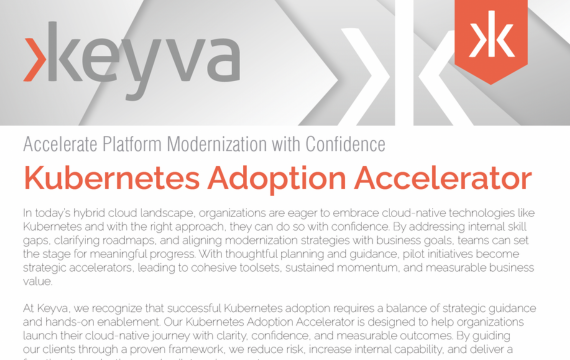
Kubernetes Adoption Accelerator

Total Cost of Ownership: Virtualization and Container Environments
CTO Talk: DevOps